
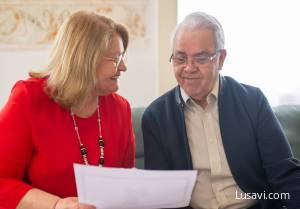
Retirees and working after retirement: an opportunity to stay active and value your experience
For many years, retirement was considered the finish line of working life: a time to dedicate oneself exclusively to rest and leisure. Today, however, reality has changed. More and more retirees choose to continue working, not only to supplement their income, but also to stay active, nurture social relationships, and share the skills gained through a lifetime of experience.
Retirement does not mean stopping being useful
Retiring does not mean losing your professional value. On the contrary, it represents a new phase of life in which you can freely decide how to spend your time.
Many retirees possess skills that are highly sought after today: artisans, technicians, teachers, office workers, professionals, gardeners, mechanics, electricians,
and many others can still offer a valuable contribution to individuals and companies.
Why are more and more retirees choosing to work?
The reasons are manifold and go far beyond the financial aspect.
Supplementing income
For some people, an extra income allows them to face daily expenses with greater peace of mind, treat themselves, or help their children and grandchildren.
Staying active
Continuing to perform some activities helps keep the mind sharp, stay motivated, and maintain a positive routine.
Maintaining social relationships
Work offers opportunities to meet and connect with people of all ages, helping to counteract the isolation that can sometimes accompany retirement.
Passing on experience
The experience accumulated over the years represents a heritage that should not be lost. Retirees can teach, advise, and support those with less experience, creating a valuable exchange between generations.
An advantage also for those looking for help
Relying on a retiree often means finding a reliable, precise, and available person.
Many clients appreciate qualities such as:
- punctuality;
- seriousness;
- experience;
- attention to detail;
- willingness to listen;
- ability to solve practical problems.
For small household chores, maintenance, tutoring, IT assistance, gardening, or consulting, experience often makes the difference.
Companies rediscover the value of experience
Many businesses are also understanding how useful it can be to collaborate with retirees.
During peak periods or for specialized tasks, being able to count on experienced people represents an important added value.
Their professionalism often allows for reduced training times and guarantees a high level of quality.
Technology creates new opportunities
Thanks to online platforms, it has become simple to connect service providers with those in need.
Retirees can create their own profile, describe the skills they wish to offer, and independently decide:
- which services to offer;
- when to work;
- which area to operate in;
- what compensation to request;
- which requests to accept.
This flexibility allows them to work without constraints, dedicating only the time they desire.
The future is an intergenerational society
We live in a society where age should not represent a limit, but a value.
Fostering collaboration between young and old means creating a stronger community, where experience, enthusiasm, and innovation complement each other.
Every retiree possesses knowledge and skills that can still make a difference in many people’s lives.
Conclusion
Retirement does not represent the end of the professional path, but can become the beginning of a new, freer, and more flexible experience.
Continuing to work, even for just a few hours a week, allows people to feel useful, stay active, build new relationships, and value a wealth of skills built over many years of work.
Experience does not retire: it can continue to be a valuable resource for the entire community.